

Flax modified fiber
Aug 30, 2019
Flax modified fiber
In the Russian textile industry base Ivanovo, the project commissioned by the Russian Federal Government last year has been implemented: “Linen waste and linen deep processing, manufacturing competitive products”. As a specific measure to help the textile industry, one of the important aspects of the project is to industrialize the process of the linen modified fiber – “Russian orchid”, and to price the modified linen cotton fiber. Kinds of textiles.
The traditional linen textile process can use one-third of the linen long fiber, while the remaining two-thirds of the linen short fiber, two coarse, and hemp, are only used for packaging materials such as carpet bottoms and sacks. In this way, the utilization of flax raw materials is low and the economic benefits are poor.
The production of "Russian orchid" fiber is mainly for mechanical treatment and chemical treatment of flax staple fiber, so that the flax staple fiber is "fibrous", so as to be blended with cotton and chemical fiber during spinning. Mechanical technical indicators (remaining hemp content, linear density, fiber bundle length), chemical treatment is to modify the linen short fiber according to cotton spinning process requirements (elasticity, softness, tortuosity, moisture absorption, etc.). "Russian orchid" fiber was born from a number of linen cotton fiber roadmaps.
In Russia, cotton is in short supply. Every year, more than 60% of cotton used in the textile industry depends on imports. When it is short, cotton is called “Platinum” by entrepreneurs. At present, the price of cotton in Russia is 45,000–46,000 rubles per ton, while the price of “Russian orchid” is 42,000–45,000 rubles per ton, it is used in cotton-spun blended yarns with good economic benefits. In the production of cotton and linen blended yarn in cotton spinning, the ratio should be reasonably selected, and 10-15% polyester fiber or viscose fiber can be added to stabilize the spinning process and improve the quality of the yarn. “Russian orchid” loses less than 18% in cotton spinning, while the average mechanical cotton fibrillated linen loss is 25–30%. “Russian orchid” fiber has high cleanliness and good hydrophilicity. The woven cotton and linen blended fabric is bleached according to the cotton spinning process. There is no strict requirement for the concentration of chemical additives in the original linen textile treatment. Chlorine oxidant.
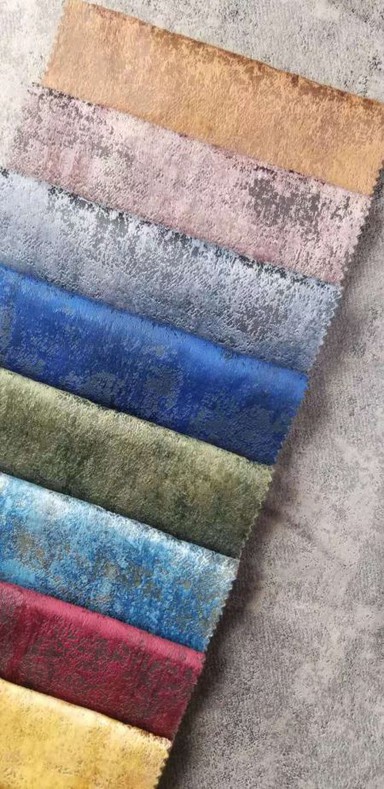
The use of "Russian orchid" fiber can develop a variety of hemp cotton fabrics, from thin underwear, shirt fabrics to home textile decorative fabrics, fabrics can be designed into a traditional cotton-like appearance, but also can be designed into a popular style (such as thick strips,Compared with other linen blend fabrics, the advantages of spinning, weaving and dyeing processes can reduce production costs.