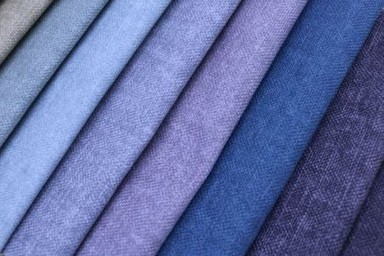


Interpretation of new textile materials
May 05, 2019
Today, apparel fabrics are not limited to cotton, hemp, silk, etc. More and more textile new materials appear in front of consumers, especially far-infrared fibers and anti-bacterial fabrics are more common in the market.
What is far infrared fiber?
The far-infrared fiber is formed by adding a powder containing far-infrared function (some functional metal or non-metal oxide, pulverized to nano-scale or micro-nano-sized powder) during the spinning process, and uniformly mixing and then drawing. The far-infrared function achieved by this method is functional and does not disappear with washing.
In recent years, far-infrared fibers have been widely used and put into production, and most of them are made by adding far-infrared absorbing agent (ceramic powder) during processing, which is an efficient insulating material.
In the mid-1980s, Japan took the lead in developing and introducing far-infrared fabrics to the market. At present, the combination of far-infrared fibers and magnetic therapy is contributing to the birth of composite health care fabrics.
Which clothing is the far infrared fiber mainly used for?
Far-infrared fibers can be used to prepare household items such as feather-like treads, socks, and knitted underwear. In addition to meeting basic applications, these products also have certain health functions.
How does far-infrared fiber keep warm?
There are two general views on the health care principles of far-infrared fibers. A kind of energy that the far-infrared fiber absorbs solar radiation is 99% concentrated in a region with a wavelength of 0.2 to 3 μm, wherein the infrared portion (>0.761 μm) accounts for 48.3%. The ceramic particles in the far-infrared fiber enable the fiber to fully absorb sunlight. The short-wave energy (the far-infrared part of the energy) is released in the form of potential (far-infrared form) to achieve the function of warming health care; the other is considered to be because the ceramic conductivity is extremely low and the emissivity is high, so the far-infrared fiber can The heat dissipated by the human body is accumulated and released in the far infrared form to increase the warmth of the fabric.
What is antibacterial fabric?
Antibacterial fabric is a special functional fabric that is antibacterially finished or contains antibacterial fiber, which can inhibit the growth and reproduction of bacteria and fungi on fabrics or make them inactive. Qualified antibacterial fabrics should ensure that they have no toxic side effects on human health and should not affect the normal flora of human skin.
How is the antibacterial fabric produced?
Human skin is a good nutrient for microorganisms in nature. In general, some resident bacteria on the skin play a role in protecting the skin from pathogens. However, once the flora in the microorganism is out of tune, a small number of the bacteria will multiply through the skin, respiratory tract, digestive tract and The genital tract mucosa causes damage to the human body. Textiles produce sweat, sebum and other secretions during human body wear. At the same time, the skin is also polluted by dirt in the environment. It becomes an important medium in the process of reproduction and transmission of germs, so it needs to resist bacteria. Textiles meet health requirements, so antibacterial fabrics are born.
How are antimicrobial fabrics classified?
According to the difference in the active state of the fabric against microbes, it can be divided into passive antibacterial fabrics and active antibacterial fabrics.
Passive antibacterial fabric itself does not contain antibacterial agents, but the surface structure has a "leaf effect", that is, the anti-adhesion effect of water repellent, oil repellent, and antifouling imparted by special finishing (such as plasma), the life of microorganisms Conditions can have a negative effect and thus play a role in inhibiting the growth of harmful microorganisms.
The active antibacterial fabric contains an antibacterial agent, and its antibacterial activity can be mainly used for the inside or outside of the cells of the microorganism, so that the growth of the microorganism is inhibited or killed.
What are the mainstream antibacterial treatment methods?
There are two kinds. One is a traditional antibacterial fabric that uses post-treatment technology, that is, an antibacterial agent is applied to the fabric through a subsequent shaping process of the fabric. The post-processing process is relatively simple and controlled according to the customer's specific requirements, which is the most widely used in the market. Such fabrics have a drastically reduced antibacterial effect as the number of times the garment is washed, so that it does not have an antibacterial effect.
The other is a built-in silver ion antibacterial fabric that uses a spinning-grade antibacterial technology to directly synthesize the antimicrobial into the chemical fiber. These fabrics have been tested by the national authority and can meet the requirements of the national standard GB/T20944.3-2008 "Evaluation of antibacterial properties of textiles". Their antibacterial, antibacterial and antibacterial effects are durable, safe for human body and have excellent antibacterial properties. effect.