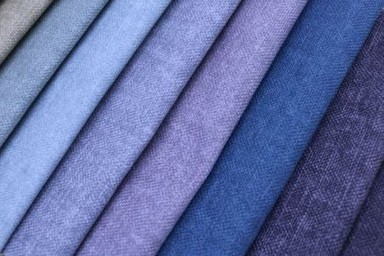


Introduction of woven fabric
May 29, 2019
The woven fabric is a looms in the form of picking, which is composed of yarns passing through the warp and weft. The organization generally has three types of plain, twill and satin and their variations. These fabrics are strong, sturdy, and not easily deformed by the warp and weft. They are classified into various components including cotton fabrics, silk fabrics, wool fabrics, hemp fabrics, chemical fiber fabrics, and their blended and interwoven fabrics. The use of clothing is a world leader in both variety and production. Widely used in a variety of high-end clothing, woven clothing because of its style, craft, style and other factors in the processing process and process means are very different.
The main feature is that the cloth has a warp and a weft. When the warp and weft materials, yarn counts and densities of the fabric are different, the fabric exhibits anisotropy, and different interlacing rules and finishing conditions can form different appearance styles.
The main advantage of the woven fabric is that the structure is stable, the cloth surface is flat, and there is generally no sagging phenomenon when hanging, which is suitable for various cutting methods. The woven fabric is suitable for various printing and finishing methods. Generally, the printing and jacquard patterns are finer than knitted fabrics, knitted fabrics and felt fabrics. There are many varieties of fabrics. As a fabric, it has good washing resistance and can be refurbished, dry cleaned and finished. Although the elasticity of the woven fabric is not as good as that of the knitted fabric, it may cause warp and weft skew when the finishing is not performed, thus affecting the deficiencies of the garment cutting, sewing processing and wearing effect, but it is widely used for clothing because of its many advantages.