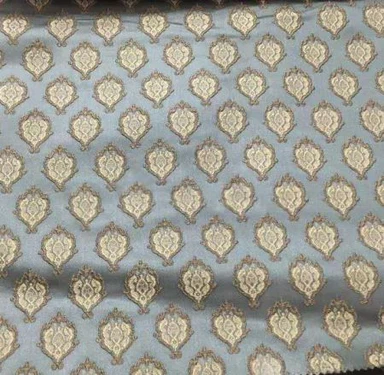


Why do high-grade fabrics have to be treated with mercerizing?
May 07, 2019
Mercerizing is a process in which cotton products (yarns, fabrics) are treated with a concentrated caustic soda solution under tension, and then the caustic soda is washed under tension. After processing, the roundness of the fiber is increased, the surface smoothness and optical properties are improved, the intensity of the reflected light is increased, and the fabric exhibits a general luster.
Why do cotton and its blended fabrics have to be mercerized?
Cotton fiber products have long been popular with people for their good moisture absorption, soft hand feeling and comfortable touch when in contact with human body. However, unprocessed cotton fabric is prone to shrinkage, wrinkling, and poor dyeing, and mercerizing treatment can improve these disadvantages of cotton products.
Improve fabric quality
The mercerized and unfilamented cotton and its blended products, such as T-shirts, button-down shirts, jackets and skirts, have significant differences in appearance and feel. The appearance of mercerized products presents a cotton-like non-cotton, silk-like non-silk texture; the hand feels soft and comfortable; the color is full and the luster is attractive.
Improve fabric dyeing performance
Most of the dyeing or printing of cotton fabrics is dyed by reactive dyes. After mercerizing treatment, the physical and chemical changes of cotton fibers can greatly increase the color yield of reactive dyes and save dyeing materials. Dark products in production, especially black and dark blue. , dark green, coffee, etc. must be treated with mercerizing, in order to produce high quality products.
Can increase the moisture absorption and elasticity of the fabric
After the fabric is mercerized, the hygroscopicity and elasticity are obviously increased, and it is the preferred fabric for sportswear such as vests and sweatshirts.
Mercerized cotton change
Structural performance
1 pure cotton cross section is waist round, mercerized cotton cross section is round.
2 Pure cotton has natural distortion, and the surface of the mercerized cotton disappears and becomes smooth.
Physical properties
1 mercerized cotton is better than pure cotton (the surface is smooth after mercerizing treatment, and there is less diffuse reflection on light);
2 mercerized cotton is stronger than pure cotton (natural distortion disappears, the fibers are closely arranged, and the cohesion increases);
3 The dimensional stability of mercerized cotton is better than that of pure cotton (the cellulose molecules are rearranged and the original internal stress is eliminated).
Chemical properties
1 mercerized cotton has improved reactivity (the amorphous region increases, and the hydroxyl group becomes inaccessible from the inability to rotate with the main price);
2 Mercerized cotton has a larger adsorption capacity for water, iodine, barium hydroxide and dye than pure cotton.
Type of mercerized cotton
According to different mercerizing objects, mercerized cotton can be generally divided into yarn mercerizing, fabric mercerizing and double mercerizing.
Yarn mercerizing: refers to a special type of cotton yarn which has the original characteristics of cotton and has the general luster of cotton when it is under tension with high concentration caustic soda or liquid ammonia.
Silk mercerizing: refers to the cotton fabric treated with high concentration caustic soda or liquid ammonia treatment under tension, which makes the fabric more glossy, more crisp and better shape retention.
Double-filament light refers to weaving into a fabric with mercerized cotton yarn, and then mercerizing the fabric to cause sufficient and irreversible swelling of the cotton fiber in the concentrated alkali. The treated fabric surface is smooth and has a silky luster. , but also strong, anti-pilling pilling, dimensional stability, etc. have been improved to varying degrees.