

Talking About The Flame Retardant Finishing Technology Of Textile Articles
Oct 17, 2019
Finishing after fire prevention: After being treated with certain chemicals, the fabric can be burnt and not extinguished when it is exposed to fire. This process is called fireproof finishing, also known as fireproof finishing. The fire retardant is a compound containing an element such as phosphorus, nitrogen, chlorine, bromine, hydrazine or boron.
Fireproof finishing fabrics can be used in military departments, industrial transportation departments, and civilian products such as carpets, curtains, curtains, work clothes, bedding, and children's work clothes.
In the 17th century, there were records on the finishing of fabrics after fire prevention. In recent years, fires caused by fabrics have increased in various countries around the world. In the past ten years in China, the average number of fires per year has been 30,000-30,000, the number of deaths has 2-3 thousand, and the loss of fire has been reduced to 200-300 million yuan. In 1985, the Harbin Swan Hotel was killed by 10 people and injured seven people. The direct economic loss was 249,000 yuan. In 1994, the Karamay fire and more than 300 casualties were caused by the burning of fabrics.
Research and development of fireproof fiber——The research and development of fireproof fiber in China started in the 1970s; since the 1980s, some research institutes, institutions and factories in Shanghai, Jilin, Shandong, Guangdong, Tianjin, Sichuan, Beijing, Jiangsu and other provinces and cities have successively Research on fireproof fibers, polyester and polypropylene have formed mass production capacity, but in general, fireproof fiber products are still in the research and trial stage.
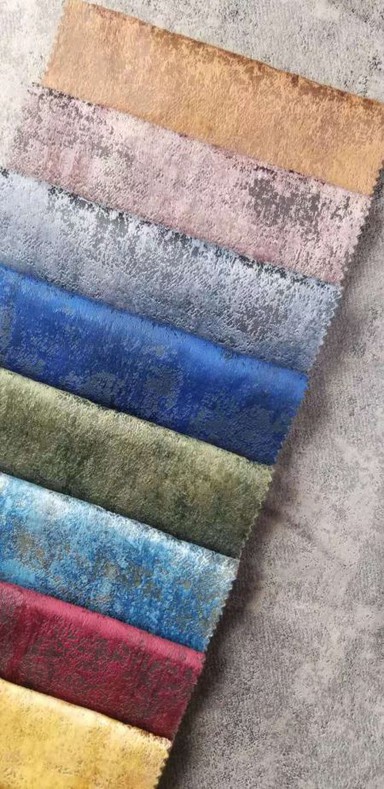
Fabrics treated with fireproof finishing technology
Specific application of fireproof finishing technology
(1) Fireproof finishing of cotton fabrics
The fireproof finishing of cotton fabrics is progressing rapidly. At present, the domestic market is relatively mature, and the fireproofing agent can be basically self-sufficient and can be industrialized.
Pure cotton durability fireproof finishing has the following three methods:
1. Proban/Ammonia smoking process, Proban method is the first industrial production in Wilson Company of the United Kingdom. The traditional Proban method is the fire-retardant THPC (tetramethylol ruthenium chloride) padding and baking process. The improved method is Proban/Ammonia. Process, process flow: padding after fire prevention finishing → drying → ammonia smoke → oxidation → water washing → drying.
Domestically, Beijing Wanhua, Jiangyin Printing and Dyeing Factory, Anshan Cotton Textile Printing and Dyeing Factory, etc., have introduced foreign additives and equipment for production. This is currently recognized as a process with good fire protection effect, small fabric strength reduction and less hand touch. However, due to equipment problems, its promotion has been limited.
2. PyrovatexCP finishing process. The Shanghai Pesticide Plant, Changzhou Chemical Research Institute, Tianjin Hecai Institute, East China University of Science and Technology, Qingdao Fabric Workwear College and other units have produced the auxiliaries. The product has good fireproof performance, good durability, and can be used for household cleaning for 50 times or even 200 times. The hand feel is good, but the strength is reduced slightly. There are two or thirty manufacturers of such fire retardants in China.
Temporary and semi-durable post-cleaning of cotton - The number of fireproof and washable fabrics for electric blankets, wall coverings, and sands is not very high. These products can be temporarily or semi-durable after fireproofing. That is, it can withstand 1-15 times and air cleaning, but it is not resistant to soaping. There are mainly borax-boric acid process, diammonium hydrogen phosphate process, phosphoramide process, dicyandiamide process and the like. The above process is applied to industrial production of pure cotton fabrics. SFR-203 of the College of Fabric Workwear of Qingdao University is a semi-durable fireproof finishing agent.
(2) Fireproof finishing of wool fabrics
Wool has a high moisture regain and ammonia content, so it has good natural fire resistance, but if higher standards are required, it needs to be fireproofed. The earliest wool fireproof finishing was to adopt the borax and boric acid solution impregnation method, and the product was used for the decorative cloth on the aircraft. This method has a good fireproof effect but is not washable. After the 1960s, the THRC treatment was adopted, and the washing resistance was good, but the process was complicated, the hand feeling was rough, and the quality of the wool fabric was lost. The International Wool Bureau research method is to adopt a complex of titanium, zirconium and hydroxy acid to finish the wool fabric and obtain the desired fireproof effect without affecting the feel of the wool. There are mainly metal complexing finishing agents such as titanium, zirconium and tungsten. Since the late 1980s, several units in China have researched and developed wool fire-retardant agents and finishing processes, and have obtained satisfactory results. Tianjin Synthetic Materials Research Institute has developed a WFR-866 series of fire retardant, one is WFR-866F (with fluorine complex as main component), and the other is WFR-866B (with brominated hydroxy acid as main component) ). Tianjin Renzhan Woolen Mill, Beijing Zhifang Factory and Beijing Woolen Mill have adopted anti-fire retardant treatment of fine and woollen products. The College of Fabric Workwear of Qingdao University has developed the SFW series of wool fire retardant, and cooperated with Jining Woolen Mill and Weifang No. 2 Wool Spinning Factory to develop pure wool fireproof products. The fire performance of the products has reached and exceeded the level of similar products at home and abroad.
At present, pure wool fireproof fabrics are mainly used in aircraft cabins, high-grade hotels and other carpets, curtains, wall materials and military uniforms.
Fireproof finishing of synthetic fibers and their blended chemical fiber fabrics
(3) Fireproof finishing of polyester fabric
Fireproof finishing of polyester fabrics So far, no suitable fire retardant has been found. Tris(2.3-dibromopropyl)phosphate (TDBPP) has a positive effect on polyester fire protection, but it has carcinogenic effects. Mobilchemco has introduced an Antiblaze 19T fire retardant for 100% polyester fabrics with good results and low toxicity. The FRC-1 manufactured by Changzhou Chemical Research Institute of China is a similar product. Changzhou Knitted Fabric Factory and Shanghai Knitted Fabric Factory use this fire retardant to produce pure polyester knitted fabrics. In addition, the finishing agents containing bromine and ruthenium compounds, such as decabromodiphenyl ether, hexabromocyclododecane, antimony trioxide, antimony pentoxide, etc., have been studied, and a binder is added to the working fluid. The fire retardant is bonded to the fabric. However, in general, the finishing fabric has good fire resistance, but the hand feel is hard, there is hoarfrost phenomenon, color change, etc., and the stability of the finishing liquid is not good. The main reason is that the fire retardant has a large particle size, is easy to coagulate, and has poor adsorption to fibers. According to foreign introduction, the particle size is 15-20nm, the fireproof effect can be increased by 3 times, the hand feeling is soft, and the washing durability is also good.
Domestic research on polyester fabrics includes: Changzhou Chemical Research Institute, Changzhou Knitted Fabric Factory, Changshu Weft Knitting Factory, Liaoning Warp Knitting Factory, China Fabric University, Qingda Fabric Workwear College, Shijiazhuang Fabric Warp Knitting Factory, etc.
(4) Fireproof finishing of cotton fabric
Phosphorus and halogen fire retardants for other fibers are used as nylon fireproofing agents, and the effect is not satisfactory. Hebei University used hydroxymethyl urea resin to treat nylon belts for transport belts with good results. The College of Fabric Workwear of Qingdao University used fire-resistant PU coatings on nylon taffeta with sulfur, bromine and antimony compounds to obtain better results.
(5) Fireproof finishing of polyacrylonitrile fiber fabric
Polyacrylonitrile fiber is more flammable than polyester and nylon, and its oxygen index is only 18-18.5. It is an easy-to-burn fiber. The Institute of Fabric Workwear of Qingdao University has researched and developed a series of fire retardant for polyacrylonitrile fiber-cut fabrics. The anti-UV coating on the back of suede fabrics has an oxygen number of 29 or more and a char length of 8 cm or less. However, the smoldering, the polyacrylonitrile fiber-cut fabrics developed can be used for sand, decorative cloth, etc. of automobiles, airplanes, hotels and homes.
(6) Fireproof finishing of polyester-cotton blended chemical fiber fabrics
The amount of polyester-cotton blended chemical fiber fabrics is very large, and the research on fireproof products is quite active. Polyester and cotton are two kinds of fibers, which have different combustion properties. At the same time, the blending of chemical fiber fabrics makes the combustion process more complicated. The cotton fiber is charred after combustion, and the polyester melts and drops when burned. Since the cotton fiber becomes a support, the molten fiber can be aggregated and blocked from dripping, so that the melted fiber burns more intensely, that is, the so-called "scaffold effect". Therefore, the fireproof finishing of polyester-cotton blended chemical fiber fabrics is more difficult.