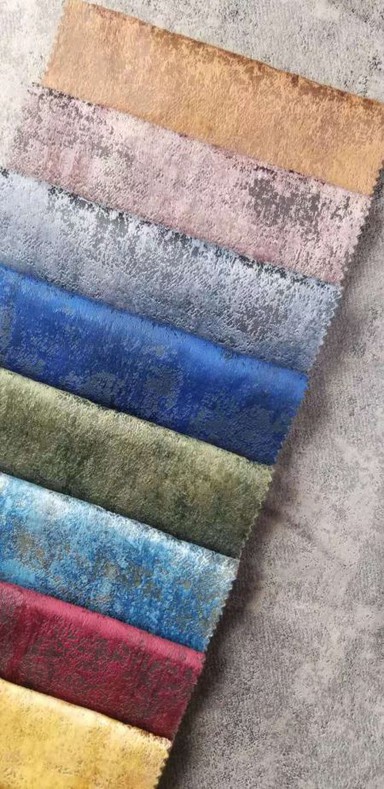


Silk Natural Dye Printing
Jul 26, 2019
Silk natural dye printing
Before the invention of synthetic dyes in 1856, all true silk dyeing and printing used natural pigments derived from plants, animals and minerals. These natural dyes can be dyed in vivid colors on silk, and their color fastness is not inferior to Synthetic dyes now in use. There are many varieties of natural dyes originating from plants. In ancient China, there are indigo, valerian, safflower, comfrey, green grass and scutellaria. Animal source dyes are less, mainly shellac purple, carmine: and so on. Mineral pigments include dansha, tin tin, lead dan, daqing, house green, vermiculite and the like. In addition to cylinder dyeing, ancient printing and dyeing methods include depiction, tie-dye, batik, letterpress and stencil printing. However, the extraction, color matching and application of natural dyes in fabric printing are not as convenient as synthetic dyes, and natural dyes are difficult to pre-form into stable dosage forms ready for application. Therefore, natural dyes are quickly eliminated by synthetic dyes. 1996 Germany: began to ban some azo dyes, scientists found that these dyes are teratogenic, carcinogenic and allergic to human body. This evokes the importance of green dyes. Natural dyes, especially plant-derived dyes, are a very safe green product for the human body, and many kinds of plants that can extract dyes are herbal medicines with certain curative effects. At the same time, the fabrics can obtain certain health care functions. Many plant dyes have a special fragrance, which is also a distinguishing feature of synthetic dyes. Many consumers who prefer natural dye textiles are attracted to this unique fragrance. Therefore, in recent years, there has been a fashion trend of textiles returning to natural dyes and natural fibers in the world. Natural fiber textiles such as silk and cotton printed with natural dyes have become high-end fashion products with high added value, and their market prospects are promising. The most popular natural dye printing methods are mainly dip dyeing and screen printing, while the most widely used natural dyes are plant-derived dyes.
Plant-derived dyes are extracted from the roots, leaves, bark, stems or fruits of plants. According to their chemical composition, they can be divided into: carotenoids, curcumin, anthraquinones, indigo, chlorophyll. And enamels (also known as tannins). Carotenoids are widely found in plant leaves, tubers, and fruits. They include both lutein and lutein, which are easily oxidized and faded under acidic conditions. Curcumin is present in the rhizome of turmeric plants and medicinal turmeric, and is not resistant to light. Anthraquinone dyes are present in plant roots, and a variety of important red natural dyes are such chemical constituents. Anthraquinone dyes have good light fastness and are easy to form metal compounds. Indigo dyes are mainly used for cotton printing and dyeing. For example, the traditional blue printing fabrics that are currently popular in the market are dyed with “mortar” after dyeing with indigo. Chlorophyll is a green dye extracted from the leaves and stems of plants. It is brightly colored but easily oxidized. Tannin plant dyes generally contain hydrolyzed tannins, which are easily hydrolyzed to produce bis-gallic acid, etc., which will complex various metal ions to dye the fibers. For example, the traditional silk product yam is dyed black by the iron complex of tannin.
The extraction of plant dyes generally utilizes plant species rich in local resources and therefore has greater geographical limitations. India is a plant resource: a rich country, so plant dye research is more active, development and utilization is earlier, and the application is wider. There are several types of plant dyes used in India for silk dyeing: jatropha, lantana, Indian genus, Euphorbia, genus, and walnut bark. Jatropha is a tropical evergreen tree or large shrub with a height of 10-15 feet. It belongs to the family Euphorbiaceae. It has many branches and branches, and the leaves are elliptical or scorpion-shaped. The one-inch wide red tufted flowers are open all year round. It is a kind of A red dye source that is easy to collect. Rubiaceae shrub is a common horticultural plant with densely clustered leaves and copper-green leaves, which is a resource-rich source of dye. The Indian otter is a 6-12 foot tall shrub that is mainly distributed in the Himalayas and northern India. It is a prosperous period of 5.6 months per year and can obtain the maximum amount of pigment from its roots. Walnut tree is a large, deciduous, monoecious tree with many plush twigs and is a common tree species in the Himalayas and Assam hills. The oil refining agent and the alcohol refining agent of the green walnut shell are used as hair dyes in India, and alum is used as a mordant. The walnut bark is brownish yellow on mordant treated wool, and rust red is dyed on mordant treated cotton fibers. Lantana contains about 50 kinds of evergreen shrubs and herbaceous plants. Common lantana varieties are wild drought-tolerant plants, which can grow to 1.5-3. The tufts are dark green, and the flowers are pink and yellow when they are fresh, and then turn red or orange. Use it to dye a range of pure white to lavender colors. Euphorbia is a tall shrub that can grow to 2 to 10 m. This deciduous shrub usually has long leaves in winter, and its elliptical large leaves have many colors such as deep red, red, white or yellow in winter. Colorful natural pigments.
Most natural vegetable dyes are mordant dyes, which have a limited range of color shades and poor color fastness. However, the combination of vegetable dyes and mordants (mainly metal salts) can be used to dye a variety of bright colors with a wide range of color. The same natural vegetable dye uses different mordants to dye different colors on the fabric. Common mordants are: potassium aluminum sulfate (alum), copper sulfate and ferrous sulfate. The mordant method generally adopts pre-mord dyeing, simultaneous mordant dyeing or post-mord dyeing. The pre-mord dyed method dipped the degummed silk into a mordant solution for 30 minutes and then dyed. Synchronous mordant is the addition of the required amount of mordant to the dye solution followed by silk staining. The post-mord dyeing method is first dyed with silk and then treated in a mordant solution for 30 minutes. Different dyes sometimes use different mordant methods to achieve the best dyeing effect. Even if the same dye is used, if different mordants are used, the mordant method should be changed accordingly. Silk is dyed with Jatropha flower dye and dyed with three different mordants, all of which are better dyed by pre-mordant dyeing. For the shrub leaf dye, the mordant dyeing method is preferred. Lantana dyes are suitable for post-mord dyeing. The ruthenium sulphate dye sulphate mordant is suitable for pre-mordation, while the alum mordant is suitable for simultaneous mordant dyeing, and the copper sulphate mordant is suitable for mordant dyeing. The silkworm walnut bark dye is dyed, the pre-mord dyeing method is suitable for alum mordant dyeing, and the copper sulfate and ferrous sulfate mordant dyeing is suitable for simultaneous mordant dyeing.
The method of refining vegetable dyes is generally scouring the plant material at 100 ° C in an acid or alkali solution, or scouring in water without acid and alkali, and then directly dyeing the fabric in a dye solution. Silk must be degummed first. The base is generally sodium carbonate, and the acid is hydrochloric acid, and the concentration is not more than 1%. The results of the dyeing test indicated that the jatropha, the lantana, the valerian shrub and the eucalyptus leaf dye were preferably extracted with an acid solution, and the walnut bark and the eucalyptus root dye were preferably extracted with an alkali solution. Among all these dyes, the acid-base concentration is preferably 1% except for the roots of the small scutellaria root, and the sorghum root dyeing should be 0.8g/100ml of the alkali solution. The scouring time of lantana, eucalyptus and walnut bark is preferably 90 min, while the scouring time of jatropha, valerian shrub and sassafras is 60 min. The concentration of the plant dye raw material added to the scouring solution is increased or decreased depending on the raw materials, and the concentrations of the leaves of the lantana, the roots of the jatropha, the jatropha and the shrub are 3, 4, 6, 7 g/100 ml of water, respectively. The concentration of the bark and walnut bark should be 5g/100ml of water. The dyeing time of silk in the above dye solution, Jatropha and Rubiaceae leaf dye is better for 30min, small root and walnut bark dye is better for 45min, and large loquat dye is better for 60min. Danhua dye is preferably 75 minutes. The results of the dyeing test showed that among the above three mordants, the application concentration of alum was higher, and the concentration was 5%, 10%, and 15%, respectively, depending on the dye. The jatropha flower, the valerian shrub leaf and the eucalyptus root dye are preferably 5% alum; the lantana and walnut bark dyes are preferably 10%; the eucalyptus dye is preferably 15%. The application concentration of copper sulfate mordant is preferably 1, 2, 3% for Jatropha and lantana; the other dyes are preferably 2, 3, 4%. All of these dyes, except for the small roots, can be dyed with 2% copper sulfate, while the small root dye can achieve excellent results with a concentration of 3%. The application concentration of ferrous sulfate mordant is preferably 1% for Jatropha and Rubiaceae leaf dyes, 2% for small alfalfa root and walnut bark, and 3% for Eucalyptus leaves dye. Danhua dye is preferably 4%.
Mulberry tea, an important economic crop in southern China, can also be used as a plant dye, especially in tea plants widely cultivated in the south. The old leaves are a resource-rich plant dye. Moreover, tea is rich in tea polyphenols, which has strong antibacterial health functions, and can be used for silk and hair dyeing to develop high-grade antibacterial health care textiles. The dyeing solution for fabric dyeing can be obtained by placing 2 g of tea leaves in 200 ml of water and heating to 85-C for 20 minutes. The tea dyes are treated with different mordants to obtain various dyeing colors with good color fastness, especially the light fastness and K/S value of the ferrous sulfate dyeing.
At present, there are many researches and applications of natural dye dyeing, while natural dye printing has less research and application. In fact, natural vegetable dyes can also be applied to silk printing. True silk natural dye printing has been used in ancient times, but the application of modern screen printing technology to the development of printed silk is a new technology that needs to be improved and promoted. According to research by Indian scientists, the four kinds of plant dyes, such as long gum and small eucalyptus root, walnut bark, valerian shrub leaf and jatropha flower, are used to make printing paste, which can be successfully applied to silk screen printing. The dye solution filtered by the plant material is concentrated by heating, and generally 100 ml of the dye solution is concentrated to 5 ml, and the prepared dye concentrate can be directly used for formulating the color paste. The mordant also uses the above three dyeing mordants, and adopts two methods of pre-mordation and simultaneous mordant dyeing. In the case of simultaneous mordant dyeing, the mordant is directly placed in the colorant in the following formulation amount. 100ml printing paste formula contains: dye concentrate 4.0ml, long gum 5.0g, fixing agent 1.0ml, mordant (by weight of paste) alum 10% or copper sulfate 1.2% or ferrous sulfate 1.5%. The printed silk is degummed and cleaned, and then dried in a semi-wet state after being dried in the semi-dry state. The printed silk is subjected to various color fastness tests after drying, steaming and washing. The results of the printing test showed that the color fastness of all four dyes was as good as good, and the results were the same with two different mordants. However, the color fastness to washing of the printed silk using the synchronous mordant method is better than that of the pre-mord printed silk. Among the four dyes, the color fastness to washing of the scutellaria root and the shrub leaf dye is superior. However, the color fastness to perspiration is better than that of the small root and jatropha dye printing. The color fastness to dry and wet rubbing of synchronous mordant printed silk is also better than that of pre-mord printed silk. Therefore, in general, the silk dye printing of vegetable dyes is preferably carried out by simultaneous mordant dyeing. Printed silks of different dyes have their own advantages and weaknesses in the color fastness of different items. Therefore, different plant dyes should be selected according to the final spinning requirements.
In short, the application of natural dyes, especially plant dyes, in silk printing and dyeing is still in the experimental exploration stage. China's plant dye resources are abundant, but the development and utilization rate is very low, which should attract the attention of the real silk printing and dyeing industry to conform to the international fashion trend. Plant dyes are especially suitable for small batches of high-grade silk printing, which not only enhances the added value of real silk products, but also attracts more consumers who advocate healthy green concepts to purchase genuine silk products.